Owner-operated · Licensed & insured · CPC1459857

License # CPC1459857
Free consultation
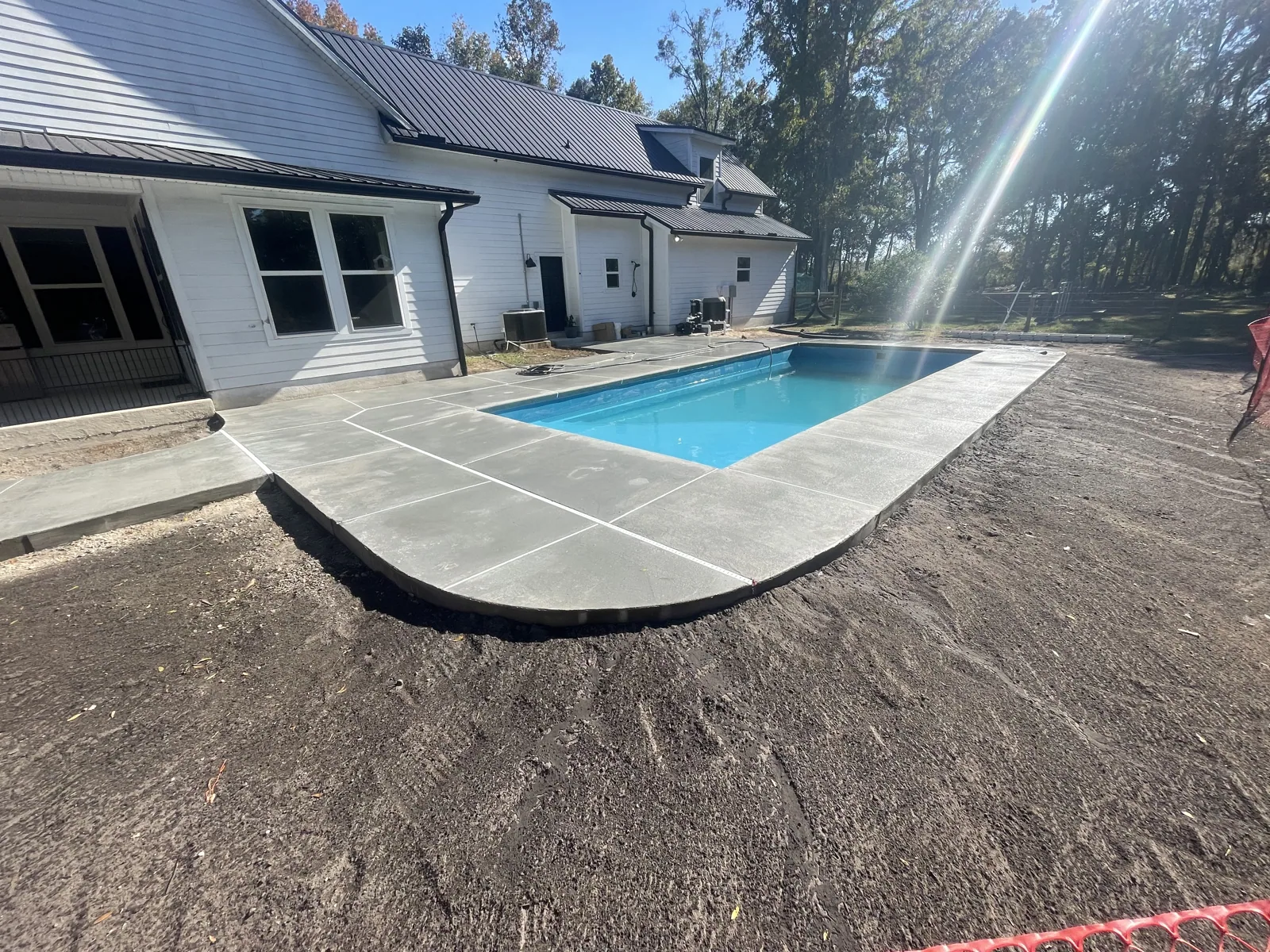
A pool deck is the part of a pool that takes the most abuse and gets the least attention. It is walked on wet, sat on hot, splashed with chlorinated water and baked by sun, and it is poured over ground that moves. So when a concrete pool deck starts to crack, flake or sink, the question is almost never whether it can be fixed. It is which of several different faults you are actually looking at, because they do not share a repair.
This is a guide to telling them apart before you pay anyone to work on yours. Southern Pools of Florida is a licensed pool builder and remodeler — licence CPC1459857 — and we repair concrete pool decks as part of pool remodeling work. Serving Clay and surrounding counties.
Four faults account for nearly every deck we are called out to look at, and they look more alike from a standing position than they are.
Concrete shrinks as it cures and keeps shrinking slowly for years. The result is a network of fine, wandering cracks, usually narrower than a credit card is thick, that do not line up with anything. They are cosmetic. They collect dirt and look worse than they are, and they are the one deck fault where doing nothing is a defensible answer.
A crack that runs in a straight line, widens towards one end, or has one side sitting proud of the other is telling you the slab has moved. That movement has a cause — a washed-out base, a tree root, a failed control joint, a section poured too thin — and filling the crack without finding the cause buys you a season.
Spalling is the top few millimetres breaking away in flakes and patches, leaving the aggregate exposed and the surface rough underfoot. On a pool deck it is usually water getting into the surface and freezing or, far more often here, salt and pool chemistry attacking a surface that was finished too wet or sealed too early.
Tap a deck with a knuckle and a hollow note means either the wearing layer has debonded from the slab or there is a void underneath it. This is the fault worth catching early. The slab above a void will eventually break through, and the repair is cheaper as a lift-and-fill than as a pour-and-replace.
Pool deck crack repair is often sold as a single product, and that is where most of the disappointment comes from. A flexible sealant in a moving structural crack will hold. A rigid patch in the same crack will reopen, usually within a year, often alongside the original. Conversely, a flexible joint filler smeared across a field of cosmetic shrinkage cracks looks like a repair for about one season and then collects dirt in a wider line than the crack ever did.
What the fault is decides what holds. A crack that moves needs something that moves with it, and the joint it sits in may need to be cut properly rather than filled as found. A crack that does not move can be routed, filled and refinished so the repair disappears into the surface. A hollow section needs the void addressed before anything goes on top. And a settled corner needs the base under it dealt with, not the surface above it.

Northeast Florida gives a concrete pool deck a specific set of problems. The water table is high and sandy soil drains fast, which means the base under a slab can be carried away by water that never pools on the surface long enough for anyone to notice. Summer afternoon storms deliver a lot of water very quickly. And the temperature swing across a single day in a Florida summer — a deck surface in direct sun against the same deck at dawn — moves concrete more than most homeowners expect.
The practical consequence is that settlement and base loss are more common here than freeze damage, and that a crack near a downspout, an irrigation line or a low spot deserves a closer look than the same crack in the middle of the deck. The cause is usually within a few feet of the symptom.
These three get used interchangeably and they are different jobs at different prices.
Repair addresses specific faults — this crack, that hollow patch, this settled corner — and leaves the rest of the deck alone. It is the right answer when the deck is broadly sound and the faults are countable.
Resurfacing puts a new wearing surface over the whole deck. It is the right answer when the surface is tired, stained or spalled across most of its area but the slab underneath is sound. It is also a cosmetic reset: a resurfaced deck can change colour and texture entirely. If that is what you are after, pool deck resurfacing covers how it works.
Replacement means breaking out the slab and pouring again. It is the right answer when the slab has failed structurally across multiple sections, or when the deck is being reshaped as part of a larger project. If a pool is being rebuilt anyway, replacing the deck in the same job is usually cheaper than doing it later as its own visit — the same logic that applies to new pool construction, where the deck is designed with the pool rather than fitted around it afterwards.
Repair before resurfacing, always. A resurfacing layer is a wearing surface and it follows what is underneath it. Cracks telegraph through, hollow sections break through, and a settled corner stays settled under a beautiful new finish.
The most common place a deck problem starts is the few inches where the deck meets the coping and the pool shell. Three materials with three different rates of movement meet at that line, and the joint between them is doing more work than anything else on the deck. When that joint fails, water gets behind the coping and under the deck, which is how a cosmetic-looking gap turns into a settled section a year later.
If the coping or waterline tile is loose, lifting or grouted with something that has gone powdery, that is its own job and it usually wants doing first — pool tile and coping repair covers it.
Ten minutes with a knuckle and a phone camera will make any conversation about your deck shorter and more honest.
Tap across the deck and listen for hollow notes. Photograph every crack with something next to it for scale — a coin works. Run your hand along each crack and feel whether the two sides are level. Look for where water goes when it rains: a downspout discharging onto the deck, an irrigation head soaking one corner, a low spot that stays wet. And check the joint at the coping along its whole length, not just where you normally walk.
Bring that to a quote and you will get a number based on what is actually wrong. Tell us what you are seeing or call (904) 465-5621, and we will tell you which of the four faults above you have before anyone talks about price.
Most of them can be repaired. Replacement is the answer when the slab has broken into sections that move independently, or when the ground under it has washed out badly enough that a new surface would crack again within a season. Everything short of that — hairline cracks, spalling, a settled corner, a hollow patch — is repair work.
Width, pattern and movement. Hairline cracks that wander and stay under about the thickness of a credit card are usually shrinkage and cosmetic. A crack that runs in a straight line, is wider at one end, or has one side sitting higher than the other is structural, and filling it without addressing why it moved will simply reopen it.
A hollow sound under a tap means the top layer has lost its bond with the slab beneath it, or there is a void under the slab. Either way the surface above it will break through eventually. It is one of the few deck faults worth looking at sooner rather than later, because the repair gets larger the longer it waits.
Yes, and in that order. A resurfacing product is a wearing layer, not a structural one — it follows whatever is underneath. Cracks and hollow sections are repaired first, then the surface goes on, which is why a quote for one usually includes an inspection for the other.
It does not have to, but it is usually cheaper if it does. The deck edge and the coping meet the pool shell, so any job that touches the waterline is already working in the same place. If interior work is coming anyway, doing the deck in the same visit avoids paying twice to set up around the same few feet of edge.