Owner-operated · Licensed & insured · CPC1459857

License # CPC1459857
Free consultation
Your pool has two surfaces, and they wear out in different ways. The deck is the concrete you walk, sit and stand on around the pool. The interior is the plaster or aggregate finish you swim against. Resurfacing the deck renews the ground around the pool. Renewing the shell is a different job, covered in our guide to pool interior resurfacing.
This page is about the deck: what goes wrong with it in Northeast Florida, the three ways to fix it, and how the work actually happens. We take deck-only jobs, so you don’t need a pool remodel to have us redo your deck, though there are good reasons to do both at once, which we cover below.
Decks here don’t fail from freezing and thawing, the way they do up north. They wear out from what our climate does every day: strong sun, afternoon storms, sandy ground that shifts beneath the slab, and pool water splashing chemicals across the surface. These are the signs we look for.
The top layer of the concrete, or an old coating, starts to peel, pop or powder. Once the surface is broken, water gets underneath and the damage spreads.
Hairline cracks are normal in any slab. Cracks that have opened wide, lifted at the edges or split the deck into uneven sections usually mean the slab has moved, and that changes which fix makes sense.
Some surfaces soak up the Florida sun and stay hot all afternoon. A lighter, cooler finish can make the deck usable again in the middle of summer.
Worn or over-sealed surfaces can turn slippery around the steps, along the pool’s edge and anywhere water collects. A textured finish brings back grip where people walk wet.
Most deck problems come down to one of three fixes. The honest answer to which one you need usually comes from the slab itself rather than from a menu, and we’ll tell you what we find.
If the slab underneath is solid and mostly level, a resurfacing coating bonds a new textured, slip-resistant finish to the old concrete. It’s the least disruptive option, and it changes the color and feel of the whole deck. What it can’t do is fix a slab that’s still moving: active cracks come back through.
Pavers or travertine can go over the existing slab or in place of it, depending on its condition and on the heights at the pool’s edge and the house doors. Individual pieces handle small ground movement better than one continuous slab, and they give the deck a completely new look. Travertine also stays comfortable underfoot in the sun.
When the slab has failed rather than worn, with broken sections, sinking, or water draining toward the pool, the right fix is to remove it and pour a new deck on a properly prepared base. It’s the biggest job of the three, and it solves problems the other two can only cover.

The deck, the coping stones along the pool’s edge and the waterline tile all meet within a few inches. Redo the deck on its own and you can end up with a crisp new surface butting against tired coping, with a visible seam where the two meet. When the coping is loose or the tile is cracked, it usually makes sense to handle them in the same project. We also repair and replace pool tile and coping as a job in its own right, so you can choose the scope that fits.
We look at the slab, the cracks, the drainage and how the deck meets the coping and the house, then recommend resurfacing, re-covering or replacing, and explain why.
For a new finish, the old surface is cleaned and ground so the new material bonds. For pavers, travertine or a new pour, the old surface or slab comes up as needed and the base is prepared.
Cracks, low spots and damaged edges are dealt with before anything new goes down, so the new surface isn’t hiding a problem.
The coating is applied and textured, the pavers or travertine are laid and set, or the new slab is poured and finished.
Coatings and new concrete need time to cure before they can take foot traffic and furniture. We’ll give you the timing for your finish before work starts, and we clean up as we go.
While the work is underway and the finish cures, the deck is off-limits. The pool usually stays filled during deck work, and we’ll tell you if your project needs anything different. Access for materials and equipment is something we’ll walk through with you at the assessment.
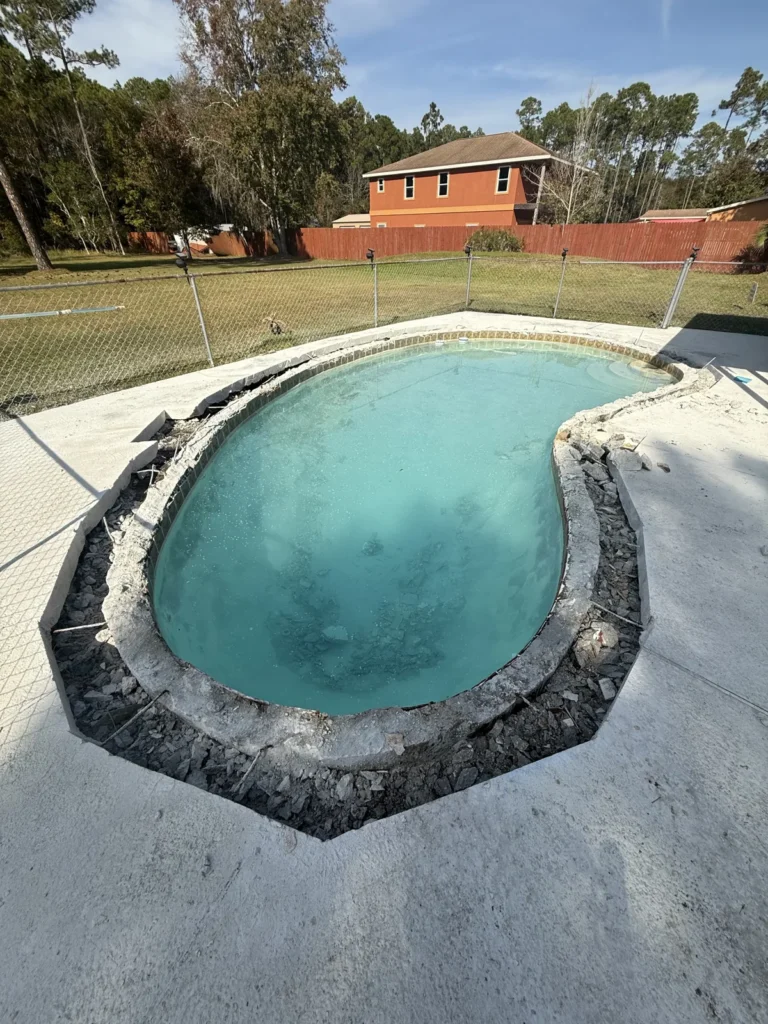

Before and after: a worn deck around a kidney-shaped pool, resurfaced with a new textured finish as part of a full remodel.
If your pool’s interior is also due, the order matters. Each new surface needs protecting while the other is worked on, and doing them as one project means one crew, one setup and one cleanup instead of two. Because we build and remodel the whole pool rather than a single surface, we can sequence the deck, the coping, the waterline tile and the interior finish so that nothing already finished gets damaged by the work that follows.
If you’re weighing up the interior as well, see what goes into the cost of resurfacing a pool’s interior, or look through finished work in our remodel gallery.
Every deck is priced on site, because the numbers depend on things we can only see in person:
The quickest way to a real number is a free consultation on your deck. If you’re planning a new pool instead, our pool packages show what comes with each design, and our pool financing page explains the options.
We’re based in Green Cove Springs and work on pool decks across Clay County, from Fleming Island and Orange Park to Middleburg, and throughout Northeast Florida. Many decks here sit inside a screen enclosure, which affects access, masking and how the work is staged, so we plan for it from the start (more in our guide to pool screen enclosures). If your home is in a community with a homeowners’ association, check its rules on deck colors and materials before you choose, and we’re glad to help you put the request together.
It’s renewing the surface around your pool, the concrete you walk and sit on, either with a new bonded finish or by re-covering it with pavers or travertine. It doesn’t involve the pool’s interior finish, which is a separate job.
No. Deck resurfacing renews the concrete around the pool. Pool resurfacing renews the plaster or aggregate finish inside the pool. They’re different jobs with different materials, though they’re often done together.
It depends on the deck’s size, the condition of the slab, the surface you choose, access, and whether coping and waterline tile are included. We price every deck on site, and the consultation is free.
It depends on why it cracked. Surface wear and small, stable cracks can often be repaired and resurfaced. Cracks from a slab that’s moving, sinking or breaking apart will come back through a new coating, and those decks are better re-covered or replaced. We’ll tell you which you have.
Yes. The enclosure changes how the work is staged and protected, and we plan for it from the start.
Often, yes. Doing them together means one crew and one setup, and the work can be sequenced so neither new surface is damaged by the other. If only one of them needs attention, we’ll tell you that too.
Yes. You don’t need a pool remodel to have us resurface, re-cover or replace your deck.