Owner-operated · Licensed & insured · CPC1459857

License # CPC1459857
Free consultation
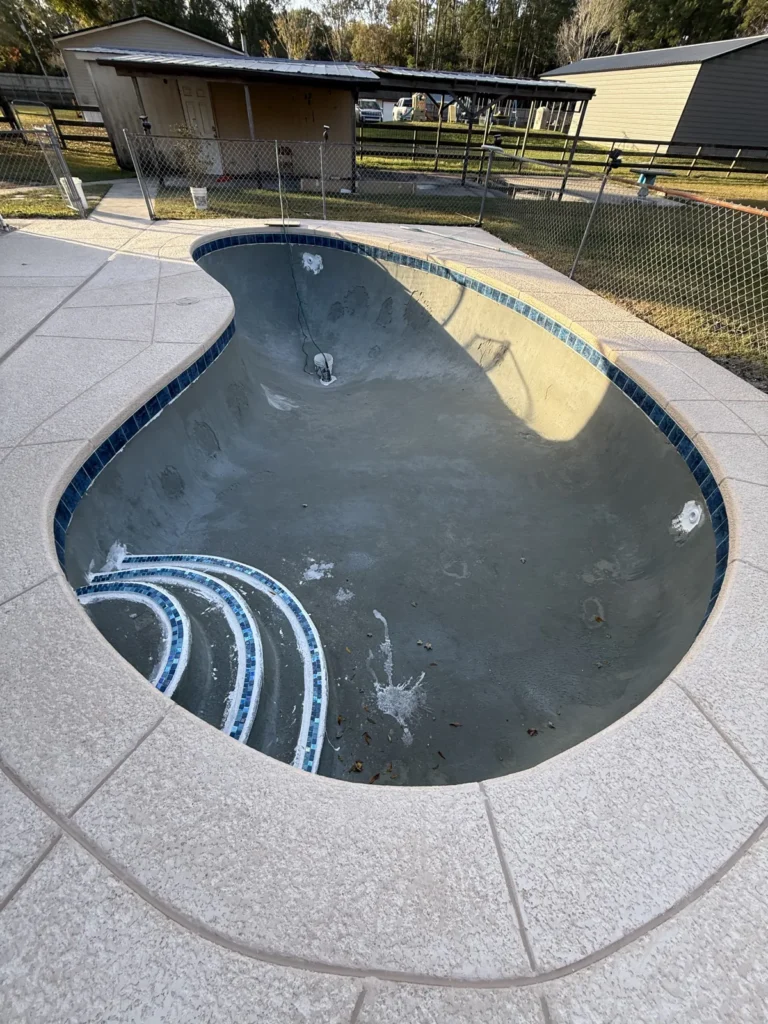
Most people who call about an older pool have already had the argument with themselves. The surface is rough underfoot, the tile line is patchy, the equipment runs louder than it used to, and somewhere in the back of the mind is the thought that it might be cheaper in the long run to start again.
Usually it is not. But "usually" is not a good enough answer when the number is this large, so here is how the decision actually gets made.
Everything cosmetic is fixable. Plaster, tile, coping, decking, lights, handrails — all of it can be replaced without touching the structure, and a pool that needs all five still does not need replacing.
The shell is the question that matters. On a concrete pool, look for cracks that run through the structure rather than sitting in the surface coat, sections that have moved relative to each other, or steel showing through. On a fiberglass shell, look for bulging walls, a floor that flexes underfoot, or a rim that has separated from the deck.
A structural problem does not always mean replacement either — but it changes the conversation from a finish job into an engineering one, and that is the point at which the two paths genuinely diverge.
A remodel that replaces the interior finish, the tile and coping, and the equipment is still a remodel. You are keeping the shell, the plumbing runs and the excavation — which is most of what a pool costs to create in the first place.
Once you are also changing the footprint, moving the pool, or rebuilding the shell, you have stopped remodeling. At that point replacement is usually the more honest description of the work, and it is often the better value, because you are paying for excavation and structure either way and may as well get the shape you actually want.
The question is not "is this pool old?" It is "how much of what is already in the ground am I going to keep?"
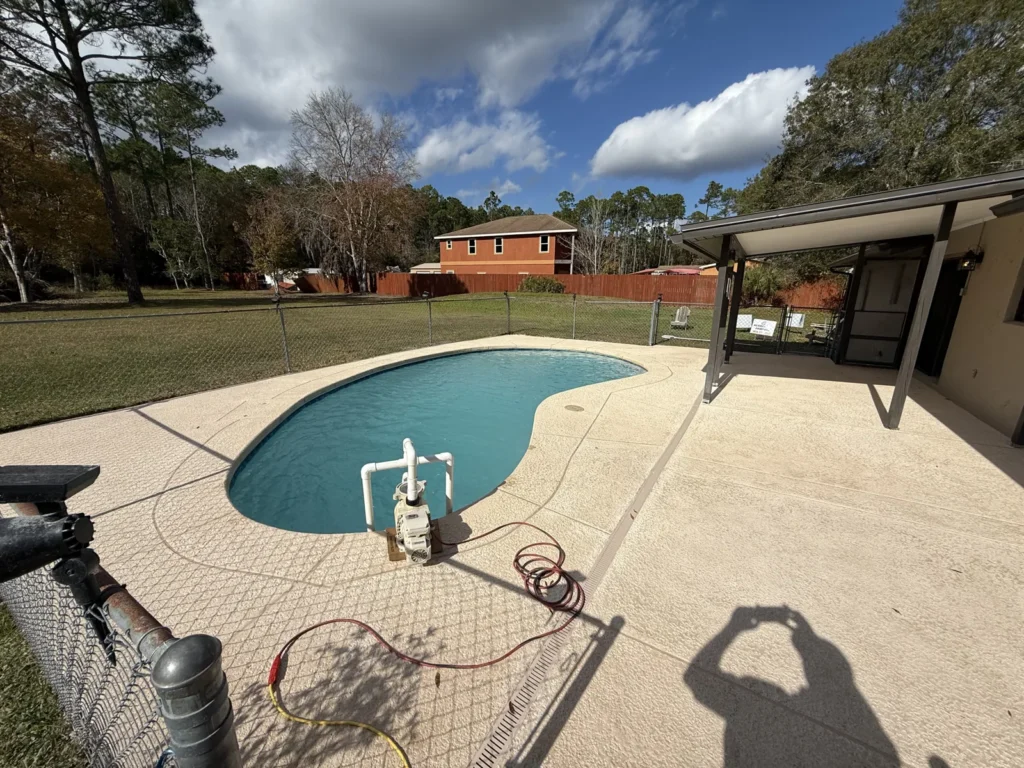
Most older pools in this part of Florida need some combination of:
None of that touches the structure, and all of it can be staged across seasons if the budget wants it that way. Our guide to what a pool renovation costs sets out which of those items moves the number most.
Replacement earns its place in a few specific situations:
That last one is worth taking seriously. Money already spent is not a reason to spend more, but a pool that has needed three interventions in five years is telling you something about the next five.
Timing is the factor people underweight. A finish-and-equipment remodel is measured in weeks. A replacement is a construction project with excavation, inspections and a build sequence — the pool construction timeline walks through what that looks like here.
If the goal is to be swimming by a particular date, that difference often decides the question on its own.
The shell assessment is not something to do from photographs. It needs someone standing at the pool, looking at the structure, the equipment pad and the deck together, because the three interact — equipment that has been working too hard often points at something else.
Southern Pools of Florida handles both paths, which is the reason the assessment can be neutral: there is no version of this where the answer has to be the bigger job. Serving Clay and surrounding counties.
If the answer turns out to be replacement, our pool designs and pricing page shows the packages and where they start. If it is a remodel, that conversation starts at the pool.
A finish, tile and equipment remodel is generally measured in weeks. A replacement is a full construction sequence including excavation and inspections.
Yes. Interior finish, tile and coping, equipment and decking are separable jobs and are often spread across seasons.
No. Surface cracks in the finish coat are a resurfacing matter. Cracks running through the structure are the ones that change the decision.
Often yes, independently of the rest. Equipment has its own service life and a variable-speed pump has the clearest running-cost case behind it.