Owner-operated · Licensed & insured · CPC1459857

License # CPC1459857
Free consultation
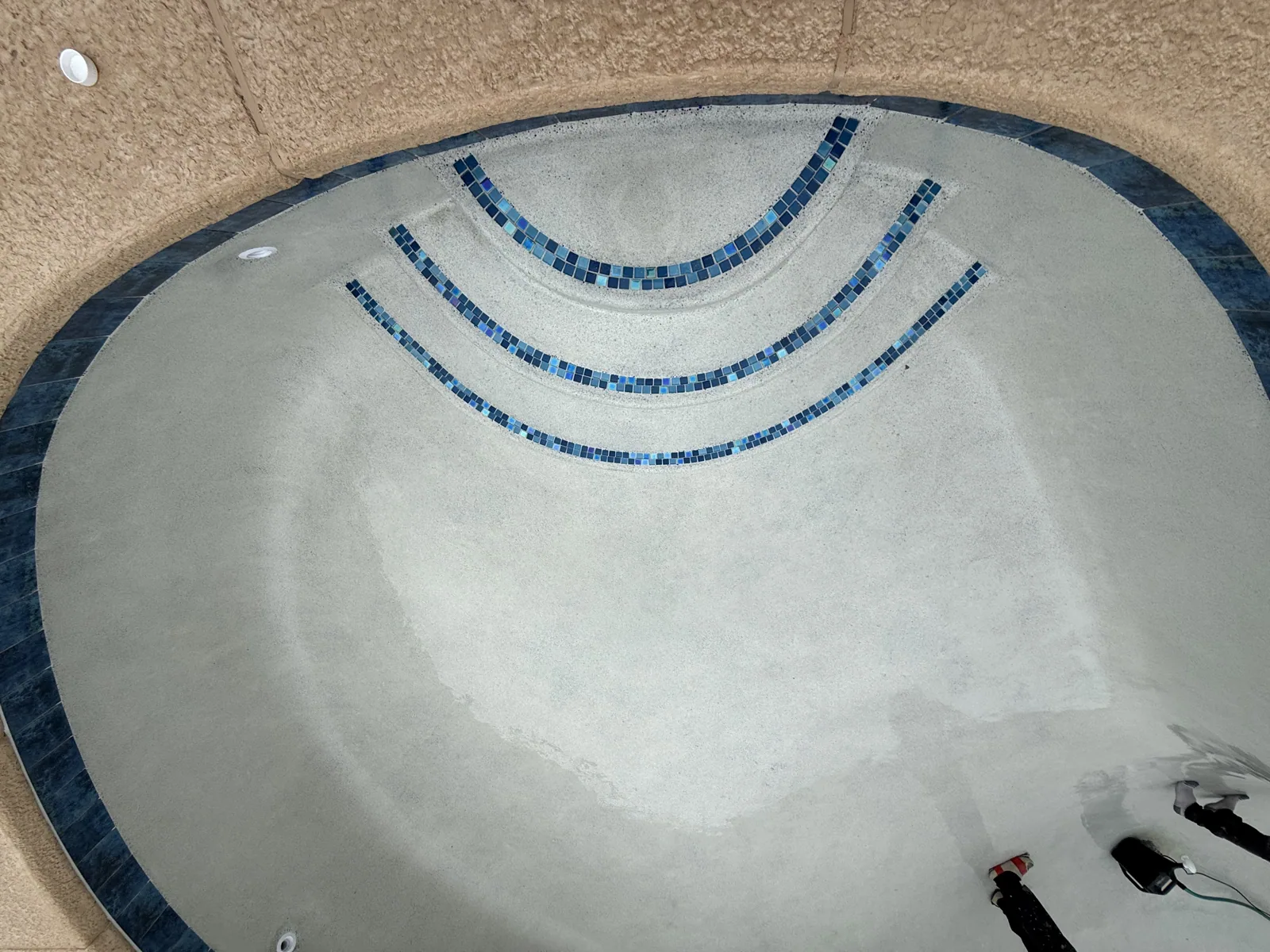
If the tile at your waterline is cracking loose or the coping around your pool has started to lift, the question is almost never “can this be fixed” — it is whether fixing the tile alone is the right call, or whether the pool is telling you something bigger.
Northeast Florida is hard on both. The water table sits high, summer afternoons swing the deck temperature by thirty degrees in an hour, and a pool that was finished a decade ago has been through enough freeze-adjacent mornings and salt exposure to loosen bond that was perfectly sound when it was laid. Tile and coping are the first places that shows.
This is a guide to reading what you are looking at — what causes each failure, what a repair actually involves, and the point at which repairing tile stops being the cheaper option.
Tile comes off for three reasons, and they look different.
Bond failure. The tile is intact but no longer stuck — you can press it and feel movement, or a whole run has come away in one piece with the thinset still attached to the back. This is the common one, and it is usually confined to a stretch rather than the whole waterline.
Substrate movement. The tile is cracked in line — a crack that runs through several tiles in the same direction, often at a corner or beneath a step. The tile did not fail; something behind it moved. Replacing the tile without addressing that gets you the same crack in a season.
Surface damage. Chips, a spidered face, missing glaze. Often impact rather than structure — a dropped ladder, a piece of equipment set down on the edge.
A white or grey crust along the waterline that will not brush off is calcium, not damage. It comes out of the water chemistry, it builds where the water line sits, and it can be removed without touching the tile at all. It is worth ruling out before you price a tile job, because a pool that looks like it needs a new waterline sometimes needs a clean and a chemistry correction.
Coping is the cap that finishes the edge of the pool, and it does a structural job: it is the joint between the pool shell and the deck, and it is designed to let those two move independently.
When coping lifts, cracks at the mortar joint, or sounds hollow underfoot, the usual cause is that the expansion joint between the deck and the shell has failed — filled with debris, or sealed over during a resurfacing, or simply gone hard with age. Once those two are locked together, the deck moves and the coping is what breaks.
That matters for how you price the work. Re-setting coping without opening and re-forming the expansion joint puts the same load back through the same weak point.
Paver coping is set in mortar and can usually be lifted and re-laid piece by piece, which makes localised repair realistic. Cantilevered concrete is poured as part of the deck, so damage there is a deck repair, not a coping repair. Precast sits in between: individual pieces can be replaced, but matching the profile and colour of a discontinued run is often the binding constraint, not the labour.
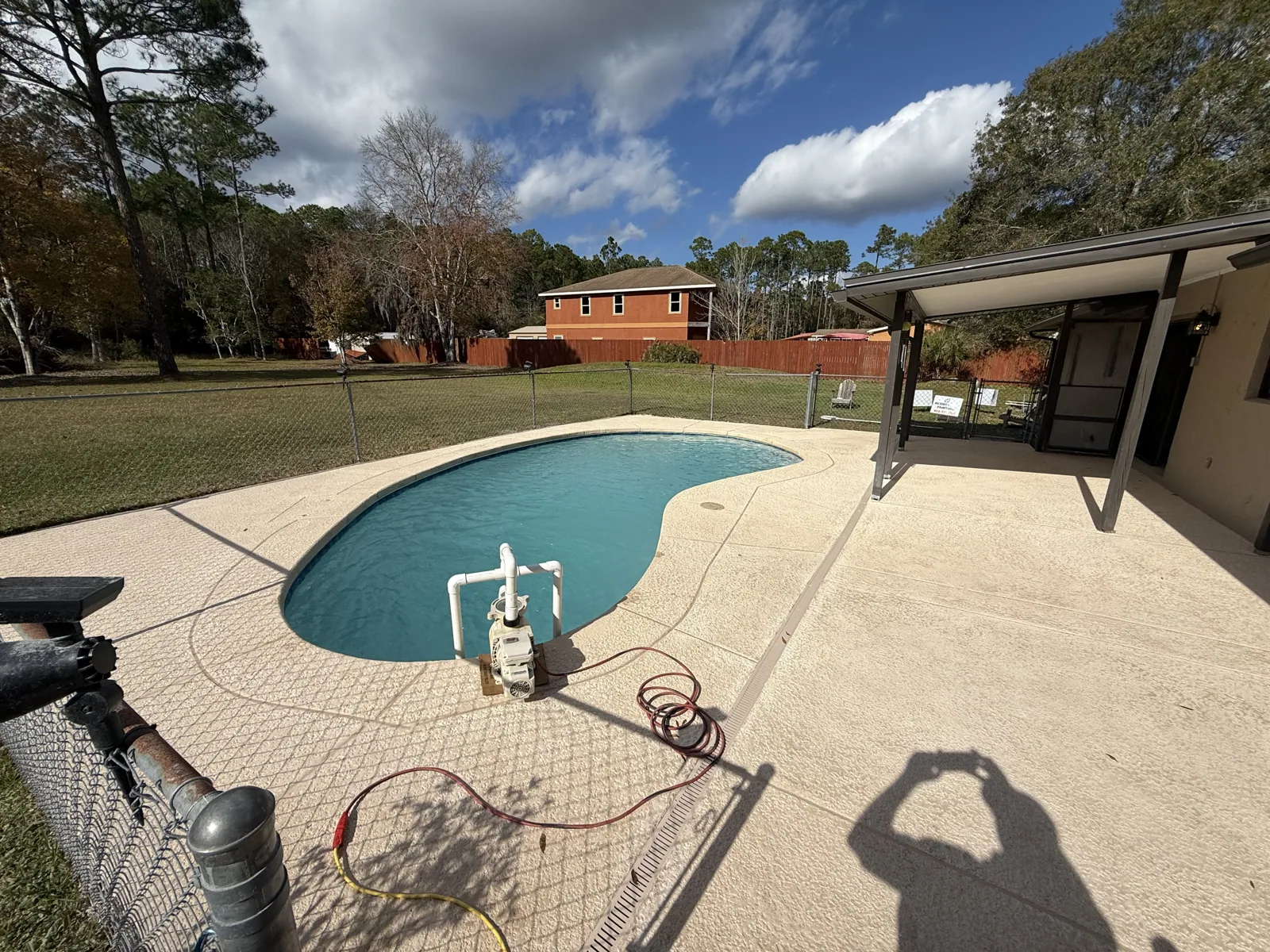
Repair is usually the better value when the failure is localised, recent, and not moving: a run of loose tile, a few chipped faces, two or three coping stones that have lifted at one corner.
It stops being the better value when any of the following is true:
The practical way to settle it is to have someone look at the whole pool rather than the one wall that bothers you. Southern Pools of Florida takes on tile and coping repair as a job in its own right, not only as part of a pool remodeling project — so if the rest of the pool is sound, that is what you get priced.
There is no single figure for tile or coping work, because four things move it more than the materials do.
Whether the pool has to be drained. Waterline tile work does. That alone sets a floor on the job, and in a high water table it has to be planned around rather than simply done — an empty shell in saturated ground is the one condition that can float a pool.
Linear feet, not square feet. Waterline tile and coping are both measured along the edge. A small pool with a complicated shape can carry more linear feet than a larger rectangle.
The tile or stone itself. Standard ceramic, porcelain, and glass sit at very different points, and glass mosaic is as much a labour difference as a material one.
Whether the expansion joint is being re-formed. On coping this is the difference between a cosmetic re-set and a repair that holds.
If you want a figure rather than a range, the honest answer is that it needs eyes on the pool. Get in touch and describe what you are seeing — in most cases photographs of the waterline and one corner of the coping are enough to say whether this is a repair conversation or a resurfacing conversation. For numbers rather than options, see what pool resurfacing costs in Northeast Florida.
Three things make the conversation faster and cheaper.
If the pool turns out to be closer to a full remodel than a patch, the starting points are pool designs and pricing and what it costs to build a pool in Clay County.
Waterline tile work requires the water to be dropped below the tile line, so in practice the pool is drained or partially drained. Repairs above the waterline, and most coping work, can often be done without draining.
The usual cause is a failed expansion joint between the pool shell and the deck. Once those two are locked together instead of moving independently, deck movement transfers into the coping and the mortar joint breaks. Re-setting the coping without re-forming that joint tends to produce the same failure again.
Usually not. A hard white or grey deposit at the water line is calcium scale, which comes out of the water chemistry rather than from the tile failing. It can generally be removed without replacing tile, so it is worth ruling out before pricing a tile job.
Repair usually makes sense when the damage is localised, recent and not spreading. Resurfacing is usually the better value when the interior finish is already worn, when damage appears on more than one wall, or when cracks run in a line through several tiles, which points at movement behind the tile rather than at the tile itself.
Sometimes. Tile runs are discontinued regularly, and on pools more than about eight years old an exact match is often unavailable. A near-match patch can be more visible than replacing the full waterline, so matching is frequently the deciding factor rather than the labour.