Owner-operated · Licensed & insured · CPC1459857

License # CPC1459857
Free consultation
Building a pool in Northeast Florida is one of the most rewarding home investments you can make — and one of the most misunderstood. Most homeowners picture the finished result long before they understand the process that gets them there. Southern Pools of Florida's licensed owners Matt Georges and Josh Lowell (CPC1459857) manage every project personally across Clay County, St. Johns County, Duval County, and Nassau County. Because of that, we hear the same questions from nearly every homeowner before construction begins: How long will this take? What happens at each stage? What should I do to prepare? This guide answers all of it, from your first design meeting through the day you step into the water.
Building a pool in Florida involves far more than excavation and concrete. The complete process — from first consultation to first swim — typically spans four to six months. Construction itself is a fraction of that timeline. Design, permitting, county inspections, and the occasional afternoon storm account for much of the rest.
Understanding each phase eliminates the frustration that catches too many homeowners off guard. So here is exactly how the process works.
Every Southern Pools project starts with a direct conversation with Matt and Josh. They use state-of-the-art 3D design software to show you your finished pool in your actual backyard — before a single shovel touches the ground. You review pool shape, depth, coping, tile, interior finish, and any features you want to include.
This phase is also where you choose your pool type. Our custom gunite pool construction option gives you full creative freedom — any shape, depth, or configuration. Fiberglass pool installation through our partners Imagine Pools (featuring Centurion Core™ technology and a 10-year surface warranty) and Rainforest Pools-N-Composites uses a pre-manufactured shell set into the excavation, which means faster installation within the available mold options. Both are excellent choices for Northeast Florida homeowners. However, the pool type you select directly affects your construction timeline, so we discuss that tradeoff upfront.
Equipment selections happen here as well. Southern Pools works exclusively with Jandy/Fluidra equipment — automation, pump configuration, and sanitization options are all decided during planning so there are no mid-project surprises.
Design and planning typically takes one to three weeks, depending on how quickly you finalize selections.
After you approve the design, Southern Pools submits your permit application to the appropriate county building division. Critically, no construction can begin until the permit is issued — and several steps must happen before that approval arrives.
Clay County uses the Tyler Technologies Citizens Access Portal for permit submission and status tracking. St. Johns, Duval, and Nassau Counties each run their own review processes, but all require similar documentation: engineered pool plans, a licensed contractor of record, and a recorded Notice of Commencement filed before the first inspection can be scheduled.
Additionally, Florida Building Code requires that you choose a compliant pool safety feature at the time of permitting. Your options include a qualifying fence or barrier that fully surrounds the pool area, a compliant automatic pool cover, door and window alarms, or a perimeter barrier meeting the requirements of Chapter 45 of the Florida Building Code. Both you and your licensed contractor sign a safety statement as part of the permit application — and the pool cannot be filled with water until that feature is in place and passes final inspection.
One more item homeowners in communities like Nocatee, Ponte Vedra, Fleming Island, and throughout Clay County's HOA-heavy developments often overlook: if your property has an HOA, you are responsible for submitting pool plans to your association for separate approval. HOA review timelines vary widely — some associations respond in days; others take several weeks. We recommend starting that process before your county permit is even submitted, so HOA delays do not push back your construction start date.
Under normal conditions, permitting in Clay County and the surrounding counties takes three to five weeks. Projects in flood zones or with unusual design elements may take longer.
The total process — design through first swim — runs approximately four to six months for most projects. Here is how that breaks down:
Fiberglass pools generally complete the construction phase faster than gunite. A gunite shell requires approximately 28 days of curing time before the interior finish can be applied — that window is built into every gunite project plan. Fiberglass shells arrive pre-formed, so the post-excavation installation phase moves considerably faster.
Northeast Florida also adds several environmental variables. Florida's afternoon thunderstorms, particularly during summer, can pause excavation and delay inspections. Furthermore, the region's sandy coastal soils and elevated water table — especially in riverfront communities like Green Cove Springs, Fleming Island, and along the Nassau County coastline near Fernandina Beach — require drainage management and excavation planning that experienced local contractors anticipate and address proactively.
Once the county issues your permit, construction moves through the following phases:
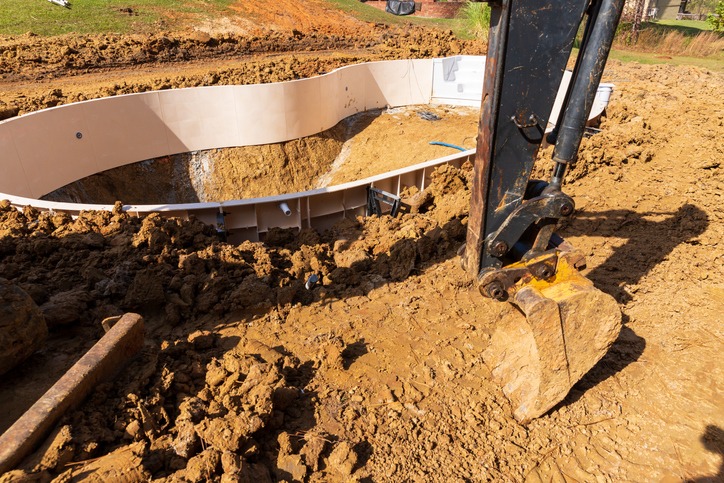
Excavation and Layout Matt and Josh mark the pool perimeter precisely according to the approved plans. We dig to the correct depth, accounting for shell thickness, drainage, and equipment placement. The dirt leaves the property the same day in most cases.
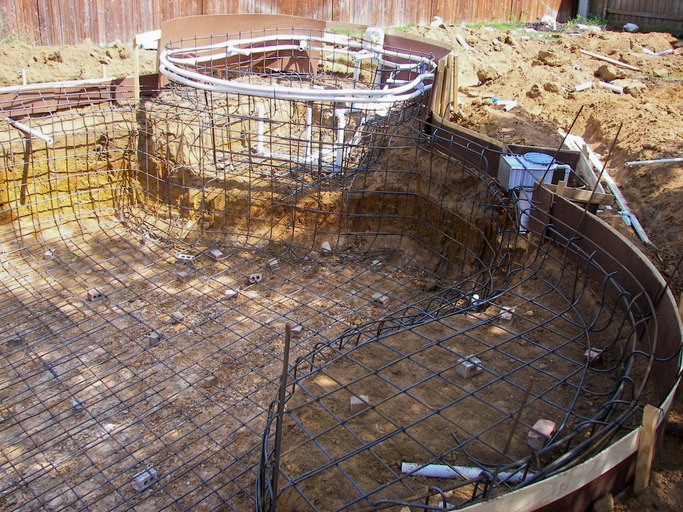
Steel Framing and Plumbing Rough-In (Gunite) / Shell Set (Fiberglass) For gunite pools, we form a rebar grid across the excavation. Clay County and St. Johns County inspectors conduct a mandatory steel inspection before any concrete is applied — no work proceeds until the county gives clearance. Plumbing lines are pressure-tested at this phase as well. For fiberglass pools, we set the pre-formed shell into the prepared excavation and begin backfilling.
Gunite Application For gunite pools, we spray a high-pressure concrete mixture over the rebar framework, forming the pool shell. The shell then cures for approximately 28 days. During that window, other phases — electrical, surrounding plumbing, preliminary decking work — continue.
Tile, Coping, and Decking After the shell is structurally complete, tile and coping go in around the perimeter. Decking — pavers, poured concrete, or natural stone — surrounds the pool. This is where your backyard starts to look finished.
Equipment and Electrical Installation Pool equipment is set and connected. If you select Jandy automation, we install and program the control system during this phase.
Interior Finish An experienced crew applies your interior surface by hand. For gunite pools, this means plaster, quartz, or pebble finish, depending on your selection. Because this surface is hand-troweled, no two applications are identical — which is exactly why craftsmanship matters.
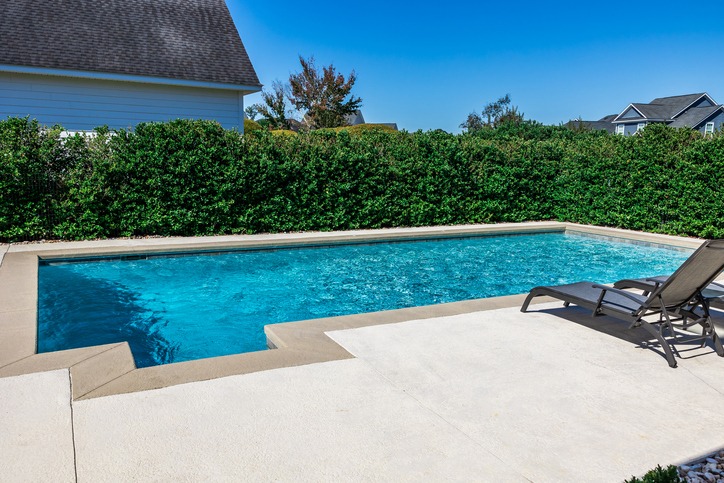
Acid Wash, Fill, and Startup After the interior finish, we acid-wash the surface, then fill the pool over one to two days. Once water levels are correct, Matt and Josh commission all equipment, verify function, and balance water chemistry. At that point, your pool is ready.
Northeast Florida is not a generic Florida market. Elevated groundwater in riverfront and coastal communities, strict county inspection schedules, HOA requirements across major St. Johns County and Clay County developments, and Florida's aggressive summer storm season all require contractors who understand this specific region — not just pool construction in general.
Moreover, you want personal accountability at every stage. When you build with Southern Pools, Matt and Josh are not just names on a contract. They are the licensed contractors making decisions on your property every day. There are no layers of management between you and the people doing the work. That level of direct accountability is simply not available at large franchise operations — and for a project of this scale, it makes a meaningful difference.
If you have more questions about the process before you're ready to call, visit our frequently asked questions page for additional answers on construction, installation, and remodeling.
Southern Pools of Florida builds custom pools throughout Clay County, St. Johns County, Duval County, and Nassau County — and every project starts the same way: a direct conversation with Matt and Josh. Call 904-465-5621 or schedule your consultation online and we will walk you through the design process, answer your permitting questions, and give you an honest, accurate picture of your timeline and budget. You can also get started on pool financing through Lyon Financial — unsecured loans up to $200,000, no home equity required, approvals within 24–48 hours.
How long does it take to get a pool permit in Clay County, Florida?
Pool permits in Clay County typically take three to five weeks from application to approval under normal conditions. Projects in flood zones or with unusual design features may take longer. Southern Pools of Florida manages the permit application on your behalf and tracks the review process throughout.
What is the difference between the gunite and fiberglass pool construction processes?
Gunite pools are built in place — a rebar grid is formed on site, inspected by the county, and then a high-pressure concrete mixture is sprayed and shaped over the framework. The shell must cure for approximately 28 days before the interior finish can be applied. Fiberglass pools use a pre-formed shell that is delivered and set into the excavation, which makes the construction phase significantly faster. Both types produce a durable, long-lasting pool suited to Northeast Florida conditions.
Do I have to choose my pool safety feature before construction starts in Florida?
Yes. Florida requires that you select a compliant pool safety feature — such as a qualifying fence, an approved automatic pool cover, or door and window alarms — at the time of permitting. Both you and your licensed contractor sign a safety statement as part of the permit application. The county will not approve final inspection until that safety feature is installed and verified.
How should I prepare my yard before pool construction begins?
Have your irrigation system capped before construction starts. Relocate or remove landscaping within the construction zone. Make sure heavy equipment can access the backyard — typically a minimum clear gate width of six feet. If your property is in an HOA, submit your pool plans for association approval well before your county permit is issued so HOA review does not delay your start date.
Southern Pools of Florida, LLC | 3052 US-17 S, Green Cove Springs, FL | CPC1459857 | 904-465-5621 | gcspoolguys.com