Owner-operated · Licensed & insured · CPC1459857

License # CPC1459857
Free consultation
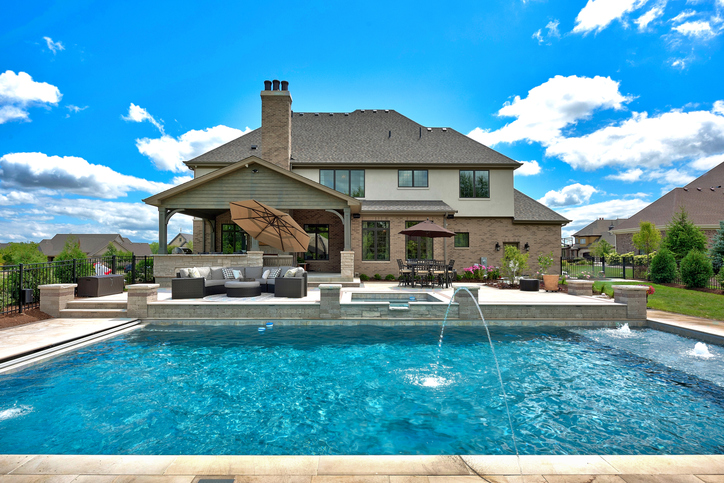
Up north, "opening the pool" means pulling off a winter cover after months of frozen dormancy. Here in Northeast Florida, the situation is different — but don't let that fool you into skipping your startup routine. As spring temperatures climb and water hits the upper 70s, chlorine demand increases sharply, algae growth accelerates, and your gunite pool's plaster surface enters its most chemically demanding stretch of the year. A concrete pool that ran trouble-free through a mild January can turn green within days if you don't prepare properly for swim season.
This gunite pool startup guide covers the chemical ranges, brushing requirements, and seasonal procedures specific to concrete and plaster pools — the kind we build for homeowners across Clay County, St. Johns County, Duval County, and Nassau County.
Fiberglass pools have a smooth, non-porous surface that resists algae and remains relatively forgiving when chemistry drifts. Gunite pools work differently. Their plaster finish is alkaline and porous by nature, which means two things. First, the surface will absorb and release minerals — particularly calcium — constantly interacting with your water chemistry. Second, algae spores can embed into the surface if you fall behind on brushing or chemical balance.
Additionally, concrete surfaces continuously drive pH upward. New plaster pools are especially aggressive in this regard. During the first season, you'll add acid more often than you might expect — and that's normal. The pool is curing, and the chemistry reflects it.
Furthermore, Northeast Florida's climate amplifies every maintenance demand. Intense UV radiation from April through October destroys chlorine faster than in northern climates. Heavy summer storms in Duval County, Clay County, and along the St. Johns County coast dilute your chemistry and drop cyanuric acid levels quickly. The result is a pool that requires more frequent testing and adjustment than many online guides written for other regions suggest.
Understanding these fundamentals makes every other step easier.
Before adjusting any chemistry, perform a thorough visual and equipment inspection. For a concrete pool heading into swim season, this initial check protects both your equipment and your plaster surface.
Start with your equipment. Clear your pump basket, filter, and skimmer baskets of any debris. Inspect O-rings and seals for wear and replace anything cracked or compressed flat. Confirm your pressure gauge reads accurately once the pump runs. Check all fittings and unions for drips.
Check your water level. Keep water at mid-skimmer height at all times. Low water levels damage the pump motor. Consistently maintaining the same level also prevents a calcium ring from forming at the tile line — a stubborn problem in hard-water areas throughout Clay County and Nassau County.
Pull a water sample. Always collect your sample from at least 18 inches below the surface, away from any return jets. Take it to a professional pool dealer for a complete analysis. At home, your test kit should cover chlorine, pH, total alkalinity, calcium hardness, and cyanuric acid at minimum.
Add a metal and scale inhibitor before anything else. Apply this before adjusting any other chemical, especially when restarting after a low-activity period, adding makeup water, or at the beginning of swim season. Weekly use of a metal and scale inhibitor is not optional for concrete pools — it protects your plaster surface and is required to maintain your surface warranty.
Once you've completed this baseline, balance chemistry in order: total alkalinity first, then pH, then calcium hardness, then chlorine and cyanuric acid.
Getting these numbers right matters more for gunite pools than for any other pool type. Surface damage from out-of-range chemistry is often permanent without replastering. Consistent water balance is also a warranty requirement for plaster finishes.
Maintain calcium hardness between 200–500 ppm, targeting 300–400 ppm as your ideal range. This parameter matters more for concrete pools than anything else.
When calcium hardness falls below 200 ppm, the water becomes chemically aggressive. It will seek balance by dissolving calcium directly out of your plaster — a process called etching. Etched plaster becomes rough and pitted, and the damage cannot be reversed without replastering the entire pool. When calcium climbs above 500 ppm and pH rises above 7.6, calcium precipitates out of solution and forms scale deposits on your tile line, equipment, and pool surfaces.
Northeast Florida homeowners who rely on well water need to pay close attention here. Well water in parts of Clay County, Nassau County, and inland St. Johns County can run high or low in calcium — always test your makeup water before using it to top off the pool.
Total alkalinity (TA) is the foundation of good water chemistry. Always test and adjust TA first, because proper alkalinity buffers pH and prevents wild swings that damage both your plaster and your swimmers' comfort. Maintain TA between 80–120 ppm.
pH should hold between 7.2–7.6, with a target of 7.4–7.6. A pH below 7.2 etches plaster, corrodes pool equipment and fittings, and causes eye burn. A pH above 7.6 reduces chlorine effectiveness, causes scaling on the pool surface, creates cloudy water, and promotes algae growth.
New plaster pools routinely drive pH upward for months as the surface cures. If you just had a pool plastered — whether that's a new build or a remodel — plan on testing twice weekly and adding pH decreaser (sodium bisulfate) or muriatic acid regularly during that first season. This is normal, and the frequency will stabilize over time.
Maintain free chlorine between 1.0–3.0 ppm, with 1.5 ppm as your ideal target. Chlorine controls algae, kills bacteria and other microorganisms, and oxidizes waste products. Without consistent chlorine levels, a gunite pool in Florida's heat can turn green in days.
Cyanuric acid (chlorine stabilizer) should hold between 30–60 ppm, targeting 50 ppm. Cyanuric acid shields chlorine from UV breakdown, extending its effectiveness between treatments. Because Florida's sun is intense and summer storms regularly dilute pool water in Nocatee, Fleming Island, Ponte Vedra, and neighborhoods throughout the region, test cyanuric acid monthly and add stabilizer when levels drop below 30 ppm.
More often than most new owners expect. Brush all pool surfaces — walls, floor, steps, benches, and behind ladders — at least twice weekly using a nylon pool brush. Never use wire brushes, which damage the plaster surface. During the first 30 days after a new plaster installation, increase brushing frequency to daily.
Regular brushing serves three critical functions for concrete pools. First, it prevents algae spores from embedding into the porous plaster before they establish a foothold. Second, it disrupts scale deposits before they harden into permanent buildup. Third, it circulates water near pool surfaces, improving the effectiveness of sanitizers and algaecides.
In our experience building gunite pools across Clay County and the surrounding region, brushing is the most commonly skipped maintenance task — and the one most directly tied to the premature wear we see when owners call us for remodeling.
Shock your pool every one to two weeks during warmer months. After rainstorms, heavy bather use, or extended periods of intense heat, shock sooner. The standard dose is approximately one pound of chlorine shock per 10,000 gallons of pool water. Always shock in the evening — not midday — so UV radiation doesn't destroy the treatment before it can circulate.
Here's why shocking matters: Waste from swimmers, rain, and wind combines with chlorine to form chloramines — a nitrogen compound that causes eye irritation, reduces free available chlorine, and gives pool water a harsh chemical smell. Shocking breaks down chloramines through oxidation and restores active sanitation. During a Northeast Florida summer, when pools see daily use and afternoon thunderstorms are a routine occurrence, consistent shocking is the most effective single practice for preventing algae and maintaining water clarity.
Skipping the metal and scale inhibitor. In areas with hard well water — common across Clay County and parts of Nassau County — this product is not optional. Apply it weekly. Failure to do so can void your pool's surface warranty and leads to scale buildup on the tile line that becomes extremely difficult to remove.
Allowing calcium hardness to fall too low. Soft water sounds gentle, but below 200 ppm it actively etches your plaster. Test monthly and correct before surface damage occurs.
Ignoring chemistry after rain. Summer storms in Northeast Florida are heavy and frequent. After any significant rainfall, check your chlorine and cyanuric acid levels quickly. Diluted chemistry is the most common cause of a green pool recovery call in Jacksonville and the surrounding counties.
Running the pump too few hours. Run your pump a minimum of 8–10 hours daily during swim season. For Jandy variable-speed pumps, longer run times at lower speeds deliver both better filtration and real energy savings compared to running a single-speed pump on a shorter cycle.
There's a difference between owning a gunite pool and understanding one. When you hire Southern Pools of Florida, Matt and Josh — the licensed contractors who build every project personally — walk you through exactly what your pool needs from the day you take ownership. There are no layers of management between you and the people who built your pool.
We serve homeowners across Green Cove Springs, Orange Park, Middleburg, Fleming Island, Jacksonville, Nocatee, Ponte Vedra, Fernandina Beach, and the surrounding region with custom gunite pool construction and complete pool remodeling services.
Call us at 904-465-5621 or contact us today to start the conversation about your project. Quality matters — and so does the person standing on your property every day of the build.
What is the most important chemical parameter in a gunite pool?
Calcium hardness is the most critical parameter specific to gunite and plaster pools. Maintain it between 200–500 ppm, targeting 300–400 ppm. Water that drops below 200 ppm becomes corrosive and will etch calcium from the plaster surface — damage that requires replastering to correct. No other chemistry mistake carries the same permanent consequences for the pool structure itself.
How is starting a gunite pool different from starting a fiberglass pool?
Gunite pools have a porous, alkaline plaster surface that requires higher calcium hardness levels, more frequent brushing, and consistent acid management that fiberglass pools simply don't need. New plaster pools also drive pH upward for months during the curing process, requiring frequent acid additions. Fiberglass pools are significantly more stable in their chemistry demands.
How often should I brush my gunite pool?
Brush all surfaces — walls, floor, steps, benches, and behind ladders — at least twice per week using a nylon pool brush. During the first 30 days after a new plaster installation, brush daily or more. Regular brushing prevents algae from embedding into porous plaster, removes early scale deposits, and improves chemical distribution throughout the pool.
Do I really need a metal and scale inhibitor for my gunite pool?
Yes, especially in Northeast Florida where well water frequently carries elevated mineral content. Apply a metal and scale inhibitor on a weekly basis as part of your routine maintenance. Failure to use it can void the surface warranty on your pool and allows scale to build up on tile, equipment, and the pool surface itself — buildup that becomes very difficult to remove over time.
For more answers to common questions, visit our FAQ page.