Owner-operated · Licensed & insured · CPC1459857

License # CPC1459857
Free consultation
If you're planning a new pool build in Clay County or finally moving forward on that long-overdue pool remodel, one conversation comes up fast: saltwater or traditional chlorine? For homeowners across Northeast Florida — from Orange Park and Middleburg to Jacksonville, Ponte Vedra, and Fernandina Beach — this decision carries more weight than most people expect. Florida's heat, near-constant UV exposure, and virtually year-round swim season put real demands on your water chemistry and your equipment. The system you choose shapes your daily swimming experience, your long-term maintenance demands, and how your pool's surfaces and equipment hold up over time. At Southern Pools of Florida (license CPC1459857), Matt and Josh address this question on every new construction and pool remodeling project they oversee across Clay, St. Johns, Duval, and Nassau Counties. Here's a clear-eyed look at both options.
Many homeowners assume saltwater pools contain no chlorine at all. That's a common misconception, and clearing it up first makes everything else easier to understand.
A saltwater pool still uses chlorine to sanitize — it simply generates that chlorine on-site rather than requiring you to add it manually. The system runs water through a salt chlorine generator, also called an electrolytic cell. Inside the cell, dissolved sodium chloride (ordinary pool-grade salt) undergoes electrolysis, converting into chlorine. That chlorine then circulates through your pool water, killing bacteria and algae at a steady, controlled rate. The salt then converts back and the cycle continues.
Traditional chlorine pools work differently. You — or your pool service provider — add chlorine in tablet, liquid, or granular form on a regular schedule. That approach requires frequent testing, consistent chemical purchasing, and careful dose management to keep levels in the right range. When doses fall behind the pool's demand, water quality slips quickly. When they run high, swimmers feel it in their eyes and on their skin.
Both systems sanitize effectively. The meaningful difference is in how chlorine enters the water, and how much active management that process demands of you.
Northeast Florida's environment is not gentle on pool chemistry. Prolonged heat, intense UV radiation, and the occasional afternoon storm all accelerate chlorine consumption and shift water balance. Consequently, saltwater systems offer several real advantages here.
Saltwater pools maintain lower, more consistent chlorine levels than many manually dosed chlorine pools. Swimmers typically notice the difference — water that feels softer, less irritating to the eyes, and less drying to the skin. For families with young children, or anyone who spends serious time in the water, this isn't marketing language. It's a tangible daily benefit.
Florida's heat increases chlorine consumption significantly during peak months. A saltwater generator compensates automatically, adjusting output to sustain stable sanitization even as demand fluctuates. A traditional chlorine system puts that burden on the homeowner. Moreover, consistent chlorine levels reduce the risk of algae blooms — a real concern in our warm, sunny climate.
Saltwater systems dramatically reduce the need to store and handle concentrated chlorine products. For households with children or pets, eliminating routine chemical handling is a meaningful safety improvement. Additionally, the Pool & Hot Tub Alliance recognizes proper chemical management as a critical element of pool safety — fewer chemicals on the property simplifies that equation.
Yes — saltwater systems work well as part of a pool remodeling project, and in many cases, they represent one of the most impactful equipment upgrades available.
Converting an existing gunite or concrete pool from traditional chlorine to a saltwater system is one of the most popular upgrades we discuss with homeowners during remodels in Clay County, St. Johns County, and across our Northeast Florida service area. The conversion involves installing a compatible salt chlorine generator, verifying compatibility with existing plumbing and electrical infrastructure, confirming that the pool's surface finish and fittings are appropriate for a salt environment, and dialing in the initial chemistry.
Saltwater, at pool-appropriate concentrations, is mildly corrosive over time to certain metals and surfaces not engineered for it. However, when a remodel is planned correctly — with salt-compatible fittings and a surface finish selected with the new system in mind — these concerns are well-managed. The problems we see arise when homeowners retrofit a salt system onto a pool without accounting for equipment compatibility first. That's a preventable outcome, and it starts with working with a contractor who asks the right questions before any work begins.
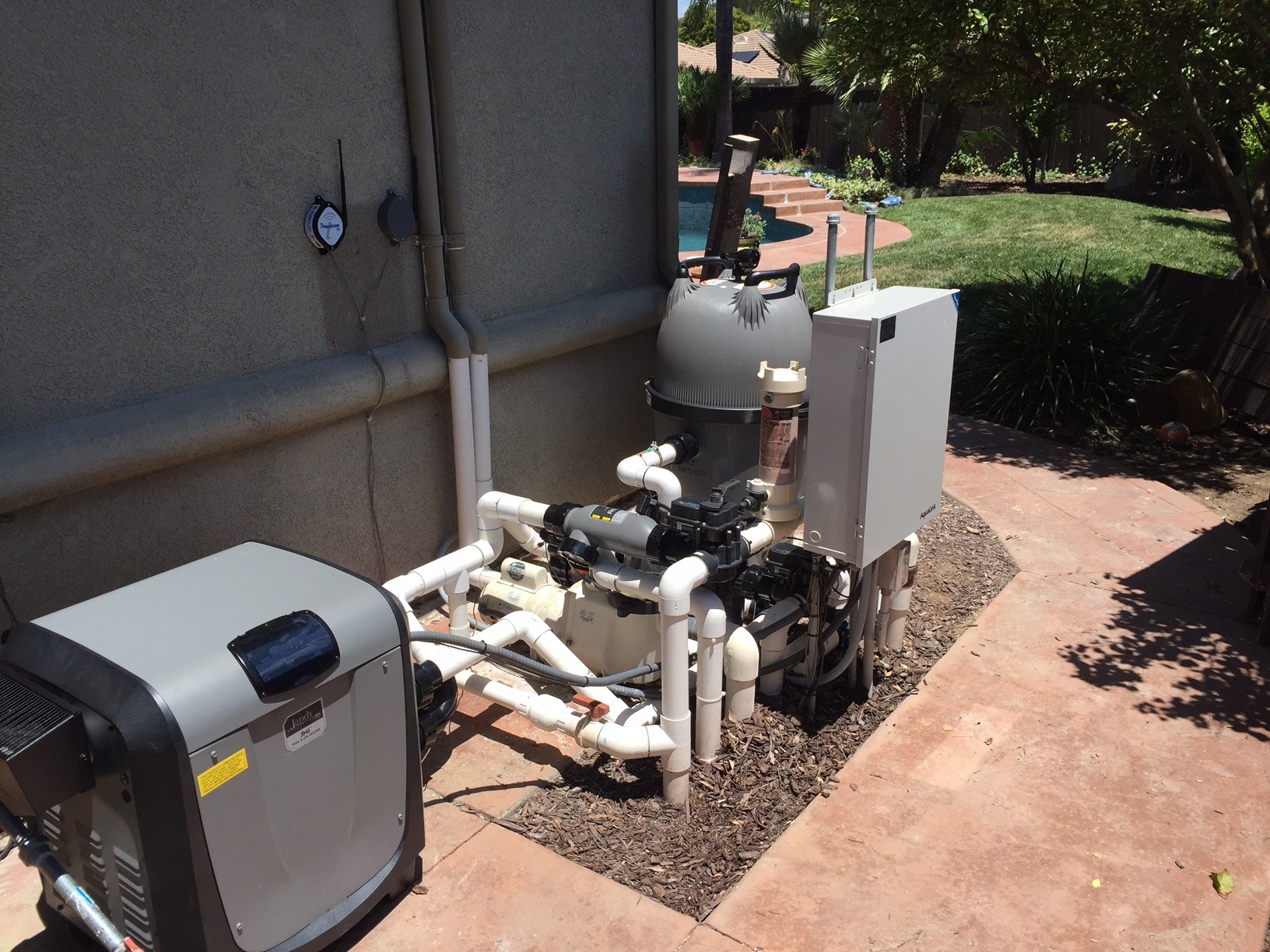
At Southern Pools of Florida, we work exclusively with Jandy — a Fluidra brand — for pool equipment on every project. That commitment extends to saltwater systems. When a homeowner selects a saltwater setup for their new build or remodel, the Jandy TruClear Salt Chlorinator is our primary recommendation.
Here's why it earns that position:
Variable-Speed Pump Compatibility. The TruClear operates efficiently at very low-flow rates. This makes it fully compatible with Jandy variable-speed pumps, which are one of the most impactful energy-saving upgrades available for any pool. Your salt system needs to work in step with your pump — and the TruClear is engineered specifically to do that.
iAquaLink Smart Control. When paired with a Jandy AquaLink automation system, homeowners can monitor and adjust chlorine output directly through the iAquaLink smartphone app. That level of visibility — from anywhere, at any time — is part of what makes a fully integrated Jandy equipment system worth considering for your project.
New Construction and Retrofit Configurations. Jandy offers TruClear versions designed for new construction plumbing and separate retrofit versions with unions for existing installations. Whether we're specifying it on a new build in Middleburg or incorporating it into a remodel in Duval County, the correct configuration exists for the application.
Self-Cleaning Cell and Calcium Resistance. The TruClear features a transparent inspection window and a self-cleaning cell designed to resist calcium buildup — an important characteristic given Florida's hard-water conditions. Reduced buildup means longer cell life and fewer service interruptions.
For larger pools, Jandy offers the TruClear XL, which handles pools up to 45,000 gallons and includes dual gas traps for added flow-detection reliability. The TruClear XL integrates with the same AquaLink ecosystem, so oversized custom pools in Nassau County or St. Johns County get the same smart-home capability.
Honestly — yes, in the right circumstances. Traditional chlorine pools carry a lower initial equipment cost because they don't require a salt cell and controller. For homeowners with specific budget constraints, or those who prefer direct, manual control over their chemical levels, a well-managed chlorine system works effectively. Furthermore, replacement parts and service support for traditional chlorine systems are universally available.
One approach we see often: homeowners build with a standard chlorine setup initially and add a salt chlorination system during a future remodel. Alternatively, others prioritize saltwater from day one. Both paths are valid. What matters is making the decision deliberately, with full information.
One important clarification applies regardless of which system you choose: saltwater pools are not hands-off. Salt levels, pH, total alkalinity, and cyanuric acid all require regular monitoring. The salt generator automates chlorine production — but it does not replace disciplined water chemistry management. Homeowners who treat their saltwater pool as a set-it-and-forget-it system often encounter preventable surface and equipment damage over time.
Whether you're designing a new custom pool in Clay County or planning a full pool remodel in St. Johns or Nassau County, the saltwater versus chlorine decision deserves a real conversation before construction begins. Matt and Josh personally walk through equipment options with every homeowner they work with — because the system powering your pool matters as much as its design.
Southern Pools of Florida offers the Jandy TruClear Salt Chlorinator as a premier option for homeowners who want professional-grade saltwater performance built into a premium build. Call us at 904-465-5621 or contact us to start your project. If you're evaluating budget and financing, explore financing options through our partner Lyon Financial.
What is a saltwater pool, and does it still use chlorine?
A saltwater pool uses a salt chlorine generator to convert dissolved sodium chloride into chlorine through electrolysis. The system sanitizes the water automatically, producing a steady, low-level stream of chlorine — without requiring you to add it manually. The pool still contains chlorine. It's simply generated on-site rather than purchased and dosed separately.
Can I convert my existing pool to a saltwater system during a remodel?
Yes. Converting an existing gunite or concrete pool to a saltwater system is one of the most common equipment upgrades we incorporate during pool remodeling projects in Clay County, St. Johns County, and across Northeast Florida. The process involves installing a compatible salt chlorine generator, confirming equipment and surface compatibility, and setting the initial water chemistry. A qualified contractor should assess your specific pool before you commit.
Are saltwater pools maintenance-free?
No. Saltwater pools still require regular water chemistry monitoring. The salt chlorine generator automates chlorine production, but salt levels, pH, alkalinity, and stabilizer all need consistent attention. Letting chemistry drift out of balance damages the salt cell and pool surfaces over time. Automation reduces your manual workload — it does not eliminate the need for good chemistry management.
Which saltwater system does Southern Pools of Florida recommend?
We work exclusively with Jandy (by Fluidra) equipment on every new construction and remodeling project. For saltwater systems, our primary recommendation is the Jandy TruClear Salt Chlorinator. It's compatible with variable-speed pumps, integrates with Jandy AquaLink automation via the iAquaLink app, and features a self-cleaning cell designed for Florida's hard-water environment. For larger pools, the Jandy TruClear XL handles pools up to 45,000 gallons.