Owner-operated · Licensed & insured · CPC1459857

License # CPC1459857
Free consultation
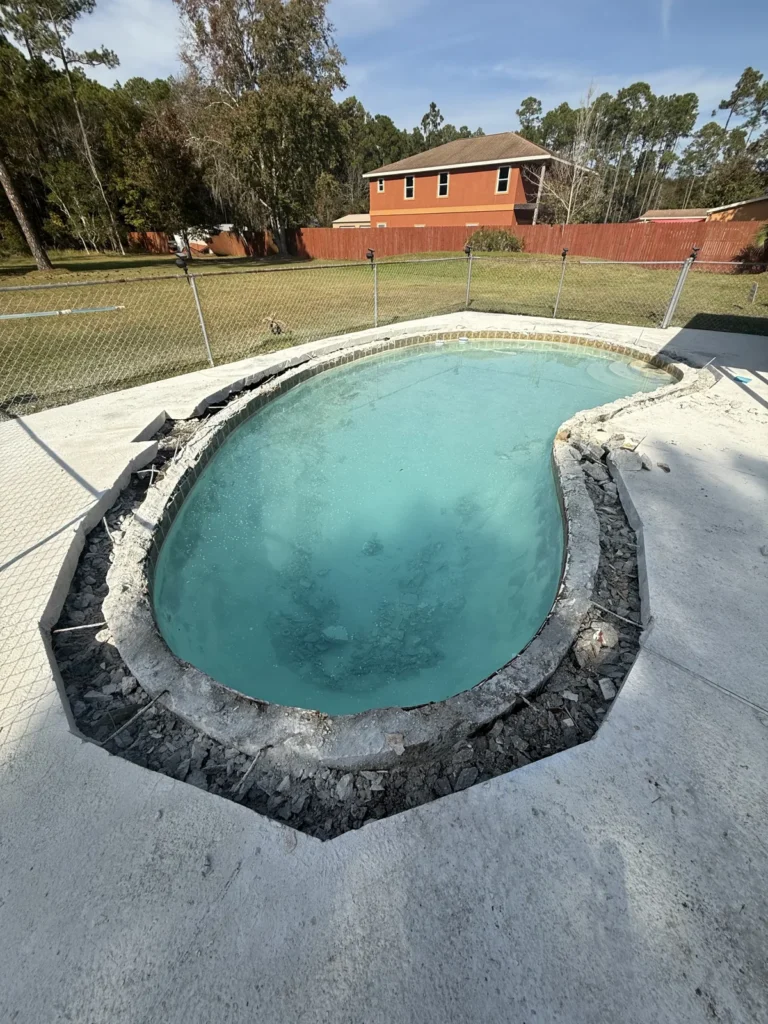
Has your pool's surface turned rough, stained, or chalky? Indeed, that is a common problem on older concrete pools here. In fact, our year-round swim season and hard water wear finishes down fast. Southern Pools of Florida, LLC (license CPC1459857) is a locally owned, owner-operated pool builder in Green Cove Springs. Pool resurfacing is one of our core remodeling services across Clay, St. Johns, Duval, and Nassau counties. In this guide, we explain what pool resurfacing involves and how to tell when you need it. We also cover your finish options and what drives the cost in 2026. Above all, we want you to plan with clear, local information.
Pool resurfacing means stripping the worn interior finish off a concrete pool and applying a fresh one. As a result, the shell looks and feels new again. Specifically, it restores the plaster, quartz, or pebble layer that seals the concrete. That layer also gives the water its color and smooth feel. Because it is the only barrier between the water and the raw shell, resurfacing is a structural refresh. In other words, it is not just cosmetic.
Notably, concrete pools rely on this interior coat, whether built with shotcrete, gunite, or poured methods. Over time, that coat wears out. Fiberglass pools work differently, because their color comes from a molded gel coat. Therefore, this guide focuses on concrete and plaster pools. In short, those are the pools that get resurfaced. If you are weighing a new build instead, our custom concrete pool construction page explains how these shells are made.
The clearest signs are a rough surface, spreading stains, flaking plaster, and spots where the gray shell shows through. In addition, constant water loss or stubborn algae can mean the finish has failed.
Most plaster finishes last roughly 7 to 15 years. Premium pebble or quartz surfaces often last longer, according to the Pool & Hot Tub Alliance. However, Northeast Florida conditions can shorten that window. Our warm water, heavy rain, and mineral-rich supply all speed up etching and staining. As a result, a pool in Orange Park or Fleming Island may need attention sooner than a national average suggests.
First, run your hand along the waterline and steps. If the surface feels like sandpaper, the finish is breaking down. Second, look for dark streaks, rust spots, or a mottled gray tone. These point to stains the finish can no longer resist. Finally, watch for small chips, cracks, or exposed aggregate. Address them early, before they widen and reach the shell.
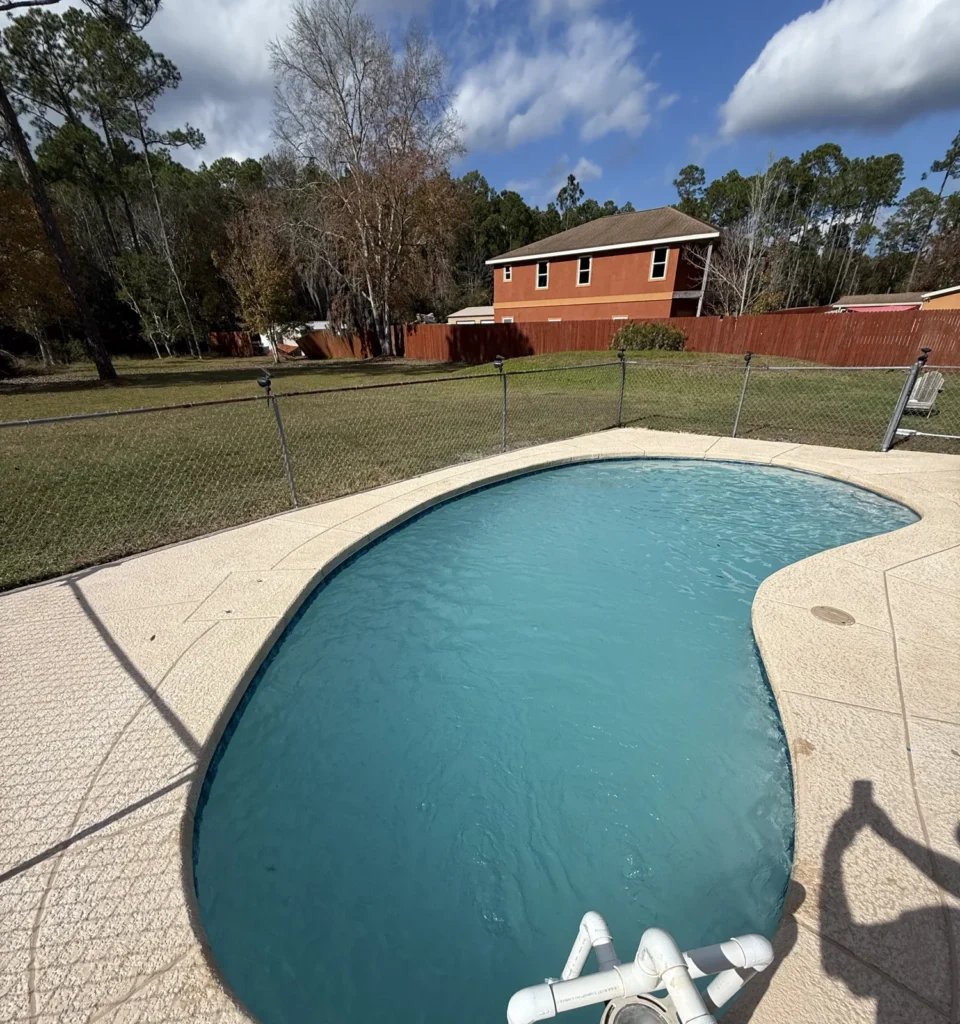
You have several finishes to choose from. Each one balances cost against lifespan and feel. Consequently, the right pick depends on your budget and the look you want.
Standard plaster, sometimes called marcite, is the most affordable option. In addition, it gives a classic, smooth finish. Similarly, quartz finishes blend natural quartz into the plaster for better stain resistance and a longer life. Meanwhile, pebble finishes press small aggregate stones into the surface. As a result, they deliver the most durable, resort-style texture. For example, many of our Clay County clients choose quartz or pebble because it holds up so well. Whichever direction you lean, we handle finish selection as part of our pool remodeling service. We also help you match the finish to how you use the pool.
No, acid washing and resurfacing are different jobs. Acid washing removes only a thin top layer of plaster. Specifically, that strips away stains, algae, and buildup, so a dull concrete pool looks bright again.
Because it removes material each time, acid washing is a restorative step, not routine maintenance. In practice, we use it no more than once every five to seven years. Moreover, it works on concrete and plaster pools only. Above all, you should never acid wash a fiberglass surface. When plaster is merely stained, an acid wash may be enough. When the finish is worn through or chipping, full resurfacing is the right fix. During a site visit, we assess which service your pool truly needs. That way, you pay for the right job.
Yes, and the deck often needs attention at the same time. Specifically, deck resurfacing refreshes the patio with new pavers, travertine coping, or a textured overlay. Cracked or faded decking is one of the first things guests notice. Therefore, many homeowners pair the two projects and save on setup.
A refreshed deck also cools the surface underfoot, which matters during a Jacksonville or St. Augustine summer. In addition, updated coping and pavers tie the whole backyard together. Finally, we coordinate interior and deck work together, so your finished space looks intentional rather than patched.
Overall, pool resurfacing costs vary widely. Specifically, the price depends on your pool's size, the finish you pick, and the condition of the shell underneath. Nationally, Angi reports that most projects fall in a broad range. For example, plaster sits on the lower end, and pebble finishes run higher. Larger or heavily damaged pools cost more, because they need extra material and prep.
Rather than quote a one-size-fits-all number, we estimate every project after seeing the pool. As a result, you get an honest figure for your finish and square footage. We do not compete on being the cheapest. Instead, we use quality materials and skilled craftsmen, so the new surface lasts. For a larger remodel or a new build, our pool designs and pricing page and our inground pool cost guide both give useful planning ranges.
For a closer look at pricing alone, our companion guide breaks down what pool resurfacing costs in Northeast Florida by finish type and pool size.
Southern Pools of Florida provides expert pool resurfacing and remodeling across Green Cove Springs, Orange Park, Fleming Island, and Jacksonville. We also serve the wider Clay, St. Johns, Duval, and Nassau county area. When you work with us, the licensed contractors who plan your project also build it. In short, there are no layers of management between you and the crew. Call 904-465-5621 or contact our team to schedule a free on-site assessment.
Most concrete pools need resurfacing every 7 to 15 years. Plaster wears fastest, while quartz and pebble finishes last longer.
Not in the same way as concrete. Fiberglass pools have a molded gel coat, so a pro refinishes or repairs them rather than replastering. You should never acid wash them.
No. Acid washing removes a thin layer of plaster to clear stains, while resurfacing replaces the whole worn finish. Acid washing is a restorative step used every few years, not a substitute for resurfacing.
Quartz and pebble finishes tend to perform best here. They resist staining and hold up to warm water and heavy rain better than standard plaster.
Most projects take a few days to a couple of weeks. The timeline depends on the finish, the pool's size, and any shell repairs needed first.